Get our newsletter!



challenging poor care with expert knowledge
Resources

Laura Fitzgerald
SCIE’s Mental Capacity Act (MCA) resource
From the Social Care Institute of Excellence's website
This resource has undergone major changes to support SCIE’s aim of providing an accessible resource that people will come to as their first port of call in relation to the MCA – when people want to know what already works and what might work in future.
Given the potential of the MCA to touch the lives of millions – particularly those who live with learning disability, dementia or mental health problems and those working and caring for them – people can choose from a range of guidance materials and links to access the tools that best support them.
If you’re visiting this resource for the first time, you may find the section below a good place to start.
The site begins with the basics in terms of introductory knowledge and key messages, and builds up through stages, with links to guidance targeted at specific audiences, such as health and social care professions and independent mental capacity advocates (IMCAs).
READ FULL ARTICLE HERE (opens in a new window)
Deprivation of Liberty Safeguards (DoLS)
From the Social Care Institute of Excellence's website:
The Deprivation of Liberty Safeguards (DoLS), which apply only in England and Wales, are an amendment to the Mental Capacity Act 2005. The DoLS under the MCA allows restraint and restrictions that amount to a deprivation of liberty to be used in hospitals and care homes – but only if they are in a person’s best interests. To deprive a person of their liberty, care homes and hospitals must request standard authorisation from either a local authority or health body. Six assessments have to take place before a standard authorisation can be granted.
-
At a glance – The Deprivation of Liberty Safeguards
This summary includes guidance on what deprivation of liberty is and how it is authorised under the DoL safeguards. It also discusses urgent authorisations, the safeguards for people who may be deprived of their liberty and when DoLS cannot be used.
-
Report – Deprivation of Liberty Safeguards: putting them into practice
This resource describes good practice in the management and implementation of the Deprivation of Liberty Safeguards. It includes the roles of clinical commissioning groups (CCGs) and wider local authority governance.
-
This practice guidance describes the role of Independent Mental Capacity Advocates (IMCAs) and paid representatives in the Mental Capacity Act Deprivation of Liberty Safeguards (MCA DoLS).
READ FULL ARTICLE HERE (opens in a new window)
The Deprivation of Liberty Safeguards
From the Social Care Institute of Excellence website
- The Deprivation of Liberty Safeguards are an amendment to the Mental Capacity Act 2005. They apply in England and Wales only.
- The Mental Capacity Act allows restraint and restrictions to be used – but only if they are in a person's best interests.
- Extra safeguards are needed if the restrictions and restraint used will deprive a person of their liberty. These are called the Deprivation of Liberty Safeguards.
- The Deprivation of Liberty Safeguards can only be used if the person will be deprived of their liberty in a care home or hospital. In other settings the Court of Protection can authorise a deprivation of liberty.
- Care homes or hospitals must ask a local authority if they can deprive a person of their liberty. This is called requesting a standard authorisation.
- There are six assessments which have to take place before a standard authorisation can be given.
- If a standard authorisation is given, one key safeguard is that the person has someone appointed with legal powers to represent them. This is called the relevant person's representative and will usually be a family member or friend.
- Other safeguards include rights to challenge authorisations in the Court of Protection, and access to Independent Mental Capacity Advocates (IMCAs).
READ FULL ARTICLE HERE (opens in a new window)
Monitoring the Deprivation of Liberty Safeguards report shows the need for greater efforts to protect vulnerable adults
From the Care Quality Commission's website:
We have published our sixth annual monitoring report on how hospitals and care homes in England are using the Deprivation of Liberty Safeguards.
Part of the Mental Capacity Act 2005 (MCA), the Deprivation of Liberty Safeguards protect the rights of people who are deprived of their liberty so that they can be given necessary care and treatment.
Data from CQC’s own more robust and specialist inspection regime shows that there is variation between providers. This means that people are not consistently receiving the protections of the Deprivation of Liberty Safeguards, which help to make sure that they are treated and cared for with dignity and respect, as much as possible in line with their own wishes.
While it recognises that some positive practice is occurring, the report calls for providers to take action to meet the requirements of the MCA including the Deprivation of Liberty Safeguards, to make sure that they are being used effectively and consistently. This includes making sure that staff receive training on and understand the MCA, that providers have policies and processes in place to support the Deprivation of Liberty Safeguards, and that processes are being properly implemented so that people are cared for appropriately and their interests are protected.
READ FULL ARTICLE (opens in a new window)
End of life care videos on Social Care TV
Useful videos to inform and educate on End of Life Care - visit the SCIE website to view them.
End of life care - Information and links for professionals who support people and their families at the end of life
This resource is for people who work with adults who are approaching the end of life. Some 500,000 people die each year and, because of the ageing population, that number is predicted to rise over the next few years. It’s important that social care and health professionals who work with people at the end of life and their families have access to high quality resources and information so they can give the best care possible.
Visit the Social Care Institute for Excellence website (opens in a new window) to read full article.
New guidelines to improve care for people at the end of life
NICE has launched the first guidelines for the NHS on improving care for people who are in their last days of life.
The guidelines aim to put the dying person at the heart of decisions about their care, so that they can be supported in their final days in accordance with their wishes.
Around 500,000 people die each year in the UK. Of these deaths 75% are not sudden, but expected.
While a recent report has ranked end of life care in the UK as the best in the world, there are areas where care can be improved and made more consistent.
Until recently, the Liverpool Care Pathway (LCP) was used to provide good end of life care. It was withdrawn however, following widespread criticism and a subsequent government review that found failings in several areas. Among the criticisms were:
- There were no ways of reliably determining whether a person was in the last days of life
- Drinking water and essential medicines may have been withheld or withdrawn
- Examples of changes to treatment were carried out without forewarning
As a result, NICE was asked to develop evidence-based guidelines on care of the dying adult. The new guideline aims to tackle these and other issues by providing recommendations for the care of a person who is nearing death no matter where they are.
Read full article on the Nice website (opens in a new window)
You Know founder Jayne Knight quoted in national press

Jayne Knight, the founder of the You Know website was quoted in yesterday's Guardian, in an article highlighting the poor care that some patients with learning disabilities or mental health problems receive in NHS hospitals and specialist assessment and treatment units (ATUs). Jayne has extensive experience in acting as an advocate for people with mental health or learning disabilities and has been directly involved in securing the release of patients who have been removed from a local care setting and taken to units often long distances from their families.
Jayne was quoted as saying that families are sidelined by professionals when they complain about care and that parents are often intimidated when they try to speak up for their child.
The article was exploring the issues surrounding the often controversial ATUs and the problems that are caused by these and other institutions which try to impose a one-size fits all approach rather than shaping care around individual needs.
You can read the full article here http://www.theguardian.com/society/2015/dec/16/families-long-stay-units-learning-disabilities
Accessibility
The accessibility features on this website are still being worked on and as such are not yet as we would wish them to be. As soon as we can we aim to make the site conform to AA standard and we apologise for the fact this is not yet in place. If you have any difficulty using this website do please contact us on This email address is being protected from spambots. You need JavaScript enabled to view it.and we will do our best to help you.
About You Know
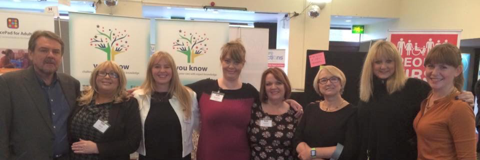
A year ago Jayne Knight had an idea that was to become ‘You Know’. The idea was to create a one-stop place where everyone knows to go to find the right information about social care, health and housing. In times of Government spending austerity there will be many challenges to face with unprecedented cuts to vital services. You Know’s development roadmap has plans to expand to include sections that rate and provide fair observations about services along with offering genuine national, independent advocacy. Join us in this journey by sharing the site with your contacts and through social media and help to support us through our sponsorship and advertising deals.
About You Know Founder Jayne Knight
 After many years of working for Ling Trust as its CEO, following positions held at Chief Officer level in Local Authorities I am now working as the interim director for the Cameron Trust, setting up a housing association for specialised housing with support.
I had the idea for this website as I have found, although there is some great housing and care out there, I can’t say is that this is consistent. Whether it is the austerity measures or just a complete turnaround on values we have all learned over the past 30 years, I have been more and more shocked and disillusioned by what I recently have seen and experienced in social care and health. I still see a system of power, control, unnecessarily incarceration, lip service to any sense of personalisation and continuing abusive practices running alongside all the good practice that we know is the right way to care for our most vulnerable people.I am asked constantly to help advocate for the person at the receiving end of poor services and very poor advice . I know many good people out there who find themselves doing exactly the same.
So this site was a start. I thought about it nearly a year ago. It was not long after my lovely mum died and I know she was able to have the best of care. I wanted to make sure other people had the knowledge and help they needed too have great care too. View Jayne's adviser profile here.